ForeFlight Maneuver Scoring: A Commercial Training Test
What interests me about ForeFlight’s new maneuver scoring isn’t just whether it gives me a good score. It’s whether it helps me understand what needs work—and whether my instructor sees the same things.
A closer look at the details
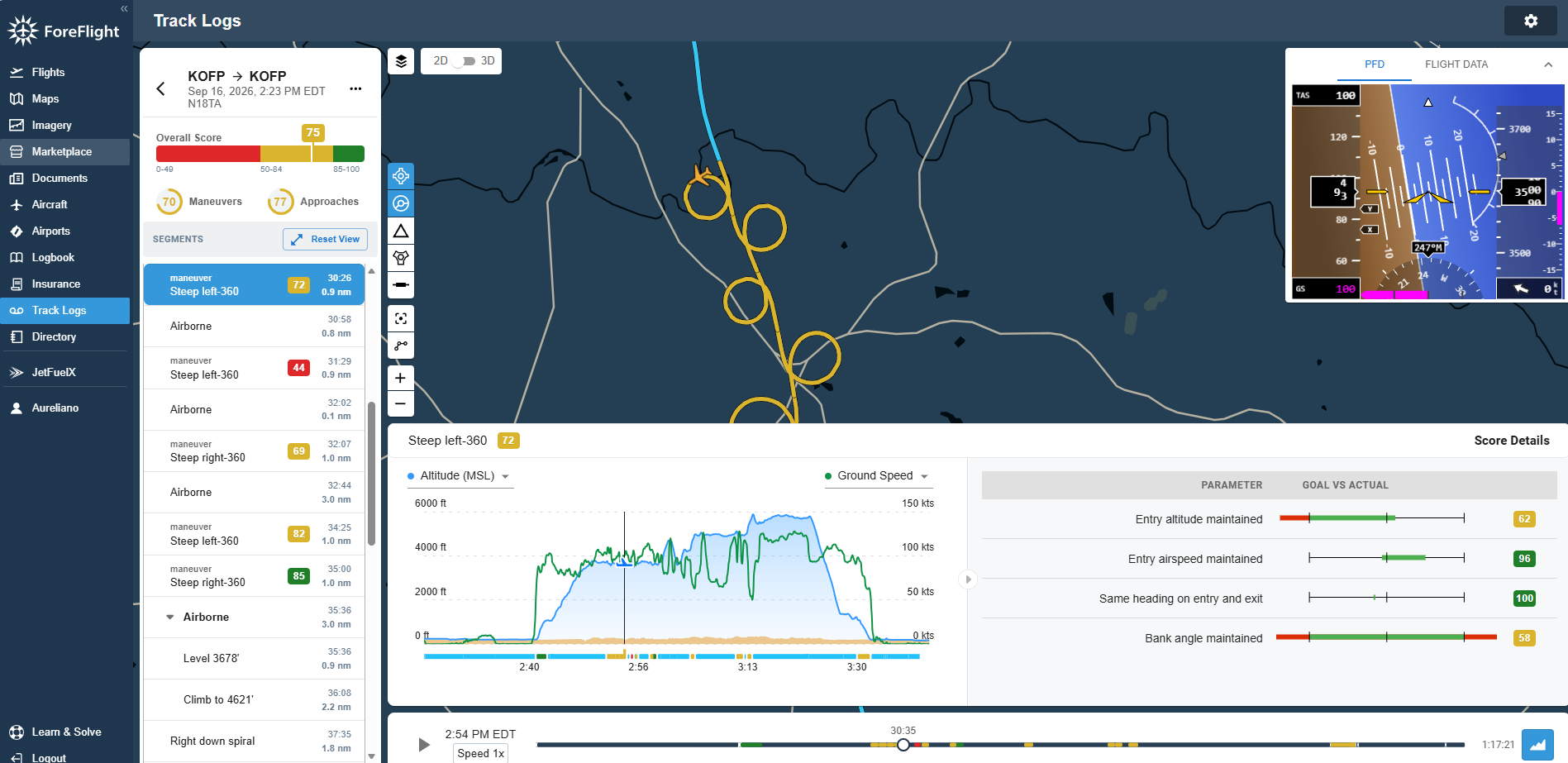
ForeFlight describes its September 2026 Debrief release as bringing maneuver segmentation, scoring, and integrated 3D review to mobile and web for Essential plans and above. According to its Debrief overview, the scores evaluate selected Airman Certification Standards (ACS) parameters.
For my commercial training, the appeal is the chance to look more closely at a maneuver. Feedback on parameters such as entry airspeed, altitude, and bank angle could help me identify which parts need attention, rather than leaving me with a simple impression that the maneuver went well—or didn’t.
But selected parameters are not the whole maneuver, and a score is not a verdict on checkride readiness. The question I want to explore is narrower: does this feedback help me train more effectively?
Instructor first, app second
The comparison I want to make starts with an instructor’s assessment, recorded before we look at ForeFlight’s scores. That order matters to me: I want to compare two perspectives, not ask an instructor to react to a number already on the screen.
If practical, I’ll use an appropriate training flight in N18TA. The plan is to pair actual instructor notes with screenshots from Debrief, then use a repeat test to explore the feedback further.
- Have the instructor assess the practice flight before reviewing the app’s scores.
- Check which maneuvers ForeFlight actually recognizes and scores.
- Compare the app’s feedback with the instructor’s notes, looking for agreement, differences, and missing context.
- Identify useful points to work on, then revisit them in a repeat test.
I don’t want to assume that every commercial maneuver is supported. Establishing what the app recognizes is part of the test, not something to take for granted.
The recording is part of the comparison
A useful review needs more than screenshots of the final scores. I want to publish the recording setup, the flight context, and any limitations alongside the comparison so readers can understand what the results are based on.
Existing track logs may be useful, but I’ll only use them where their recording quality and flight context can be established. If those details are uncertain, I don’t want to build a confident conclusion around them.
Useful feedback, not the whole picture
What I’ll be looking for is actionable feedback. Where do the instructor and the app identify the same issue? Where does the instructor add context that the score doesn’t capture? And does reviewing the flight in 3D help me understand the feedback?
I see this as another source of insight, not a replacement for a flight instructor. The potential value is in combining the detail of the recorded flight with an instructor’s understanding of what happened.
Until that comparison is complete, the training benefit remains a question rather than a result. A detailed score is interesting. Whether it helps me understand and improve the next maneuver is what I want to find out.
← Back to Road to the Flight Deck