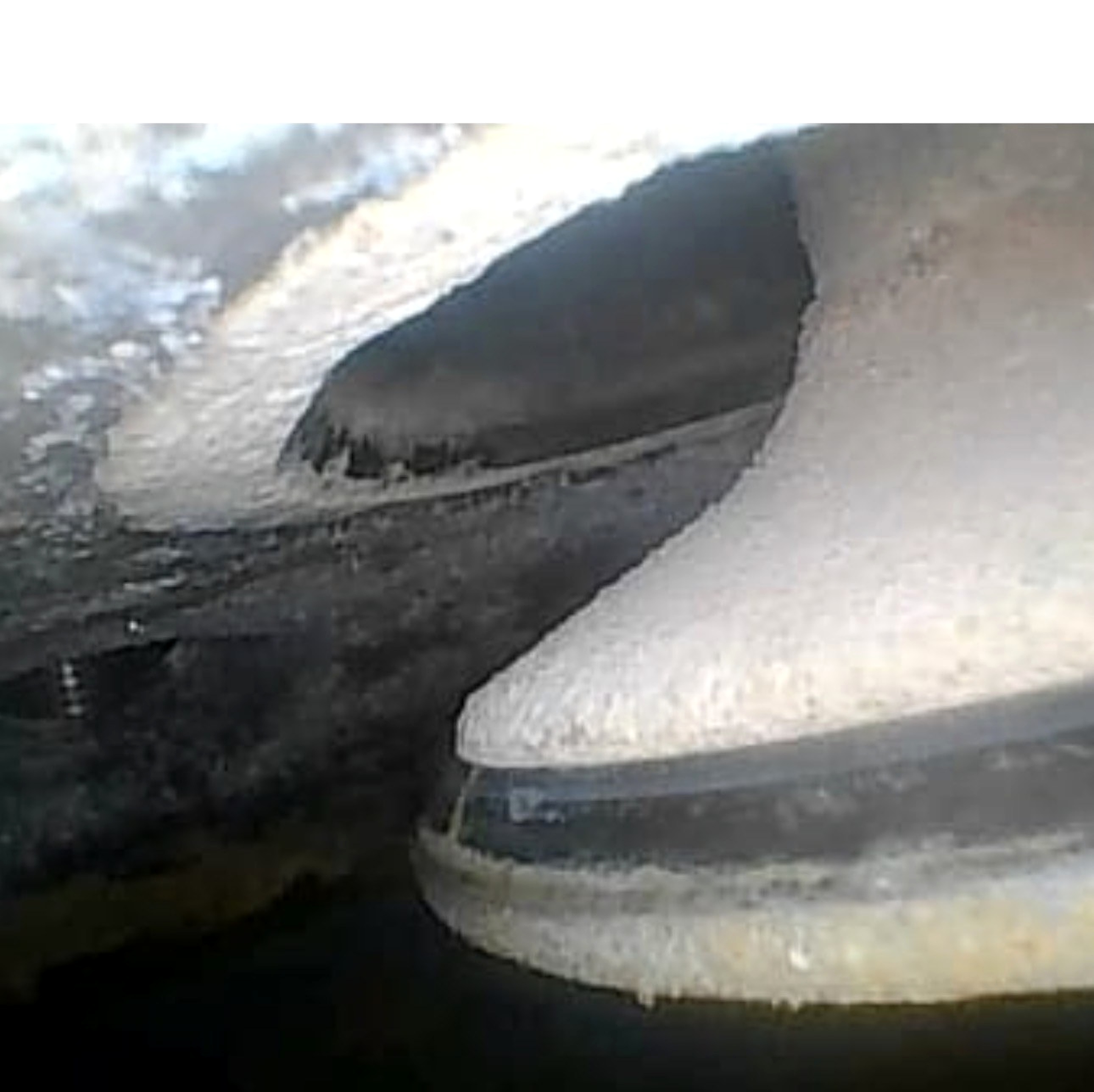
Following the Evidence: Borescope Analysis and Exhaust-Valve Lapping
After Savvy Aviation reviewed our borescope images, a warm differential compression test gave us another reason to look closely at cylinder No. 1 on our Lycoming O-360.
Important disclaimer: This article recounts our personal experience with our own experimental aircraft. It is provided solely for general informational and educational purposes and is not professional maintenance advice, a maintenance instruction, or a recommendation that anyone perform the work described. Our ownership team includes qualified maintenance personnel, including an FAA-certificated A&P mechanic and a holder of the repairman certificate associated with this specific experimental aircraft. The work described here was evaluated and performed in the context of this airplane, its operating limitations, and the qualifications of the people involved. Every aircraft and maintenance situation is different. Readers should rely on the applicable regulations, operating limitations, manufacturer or other accepted maintenance data, and appropriately qualified maintenance personnel rather than treating this account as a procedure.
Last month, we submitted a set of borescope images from our Lycoming O-360 to Savvy Aviation for review. Borescope images can reveal developing exhaust-valve problems before they become obvious through engine performance alone, and Savvy’s feedback gave us a specific reason to look more closely at one cylinder.
Their advice was to consider lapping the exhaust valve. We did not want to act on an image alone, however, so our next step was to gather another piece of evidence: a warm differential compression test on all four cylinders.
What the compression test showed
On September 17, 2026, after warming the engine, we performed the differential compression test. The readings were:
| Cylinder | Reading |
|---|---|
| No. 1 | 61/80 psi |
| No. 2 | 74/80 psi |
| No. 3 | 70/80 psi |
| No. 4 | 70/80 psi |
The number that stood out was cylinder No. 1. At 61/80, it was noticeably lower than the other three cylinders. A compression number by itself does not tell the entire story, but considered together with the borescope images and Savvy’s analysis, it gave us a consistent picture and a logical place to focus.
This was also consistent with Savvy’s published guidance. In its discussion of Lycoming exhaust valves, Savvy notes that when one cylinder is in the low 60s while the others are in the 70s, valve lapping may be worth considering. That comparison mattered more to us than simply deciding whether one isolated number was “good” or “bad.”
Following a proven process
For the procedure, we followed Mike Busch’s video, “Lapping a Valve in Place”. Busch, Savvy Aviation’s CEO and founder, demonstrates how an exhaust valve can be lapped in place rather than immediately removing the cylinder.
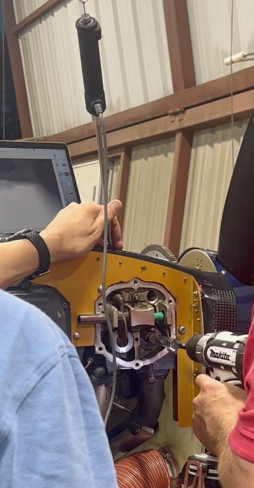
We used a MASO valve-spring compressor purchased through Amazon to release the valve springs. From there, we worked through the process one step at a time, following the video closely and using a borescope throughout the job to see what we were doing inside the cylinder.
The borescope was essential. It allowed us to observe the valve and seat, position the valve, apply the lapping compound carefully, and inspect our progress rather than working blindly. We used a flexible connection and a drill to rotate the valve slowly, taking care not to damage the valve stem and not to treat the job as something that needed to be rushed.
That last point became one of the biggest lessons of the experience. The procedure may appear straightforward in a video, but doing it carefully takes patience. We stopped frequently, checked our work, cleaned as needed, and made sure we understood each step before moving to the next one. Savvy has cautioned owners not to assume that an in-place valve-lapping job will necessarily be finished in an hour. Our experience reinforced that advice.
More than a single maintenance event
The objective was not merely to improve a compression number. An exhaust valve must make proper, even contact with its seat both to seal the combustion chamber and to transfer heat. Deposits or uneven contact can interfere with that process and, if left unaddressed, may contribute to a burned valve.
Lapping also is not appropriate for every suspicious exhaust valve. Savvy distinguishes between early or intermediate uneven heat patterns that may be candidates for lapping and advanced damage that may require cylinder removal and repair or replacement. That is why the original borescope evaluation was so important: it helped establish that lapping was a reasonable next step in our particular case.
Nor does the work end when the tools are put away. Savvy recommends treating valve lapping as a process rather than a one-time event. The cylinder must be rechecked, and the valve should continue to be monitored through future borescope inspections and compression testing.
Why we are not judging the result immediately
An immediate post-lapping compression test can provide useful information, but it may not show the final result. In fact, the first reading can sometimes be unchanged—or even lower than the original baseline. Minute traces of lapping compound, loosened carbon, or other debris can temporarily remain between the freshly worked valve face and seat, preventing a complete seal during that first test.
That does not mean abrasive compound should intentionally be left inside the cylinder. Lapping compound must be removed as thoroughly as possible because it is designed to cut metal and can damage engine components if allowed to circulate. Nevertheless, even after careful cleaning, tiny inaccessible traces or newly loosened deposits may remain. During subsequent normal operation, combustion heat and pressure can clear those traces and allow the valve and seat to establish consistent contact.
For that reason, we plan to operate the engine normally for a handful of hours and then perform another warm differential compression test under conditions as similar as practical to the original test. We will compare that result with our 61/80 baseline for cylinder No. 1 rather than drawing a conclusion from an immediate post-lapping number alone.
The follow-up reading will be interpreted together with the location of any leakage and a new borescope inspection. If the compression remains low, becomes worse, or leakage is still clearly heard at the exhaust, we will not simply attribute it to leftover compound. That could indicate that the valve is not seating properly or that another condition needs attention. A better reading after several operating hours would be encouraging, but the trend—and the appearance of the valve over time—will tell us much more than any single number.
What we took away from the experience
For my partners and me, this was a valuable exercise in evidence-based aircraft maintenance. We did not start by replacing a cylinder or by making a decision from one compression number. We began with borescope images, sought an experienced analysis, warmed the engine and tested all four cylinders, compared the results, and then addressed the cylinder for which the different pieces of evidence agreed.
It was also a reminder of how much owners can learn by participating thoughtfully in the maintenance of their aircraft. Understanding what the mechanic is seeing, why a particular procedure is being considered, and how the result will be monitored makes us more informed owners and, ultimately, more attentive pilots.
We took our time and approached every stage with care. The next chapter will come after a handful of operating hours, when we repeat the warm differential compression test, compare it with the original baseline, and continue watching cylinder No. 1 through the borescope. The goal is not simply a higher number on one test. It is a healthy valve, a reliable engine, and a better understanding of the airplane we fly.
Sources and further viewing
- Mike Busch, Savvy Aviation: “Lapping a Valve in Place”
- Savvy Aviation: “Can Lapping Save My Valve?”
This is a record of our experience with our experimental aircraft—not professional advice or a maintenance procedure. Any similar work must be independently evaluated for the particular aircraft and performed, supervised, approved, and documented as required by the aircraft’s operating limitations and applicable regulations.
← Back to Road to the Flight Deck